
Deep-UV Raman Spectroscopy
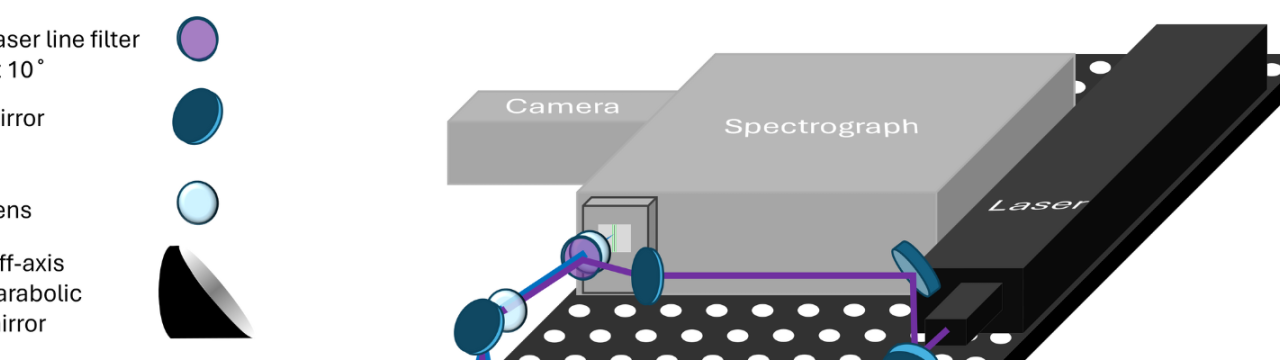
Current sorting systems cannot reliably detect black, multilayer, or additive-rich plastics, leading to high-value materials being downcycled, incinerated, or landfilled. Raman spectroscopy can be used to determine the chemical composition; a deep-UV laser source will be used to make the technique generally applicable, even for black plastics. Our approach builds the first DUV Raman spectral database of plastics, develops AI models for classification, and links this information directly to DPP systems. This enables precise identification of polymers, additives, and contaminants, creating new opportunities for high-purity recyclates and safer reuse in industrial applications.
Digital Product Passport
The link with Digital Product Passports ensures that the detailed product fingerprints of plastic waste are not just measured, but also stored and shared across the value chain. This creates transparency for recyclers, producers, and policymakers, enabling circular design choices, compliance with EU regulations, and traceability of critical materials. By providing a digital identity for plastics, the project helps establish smaller, sector-specific loops that preserve material performance and reduce downcycling.
Broader impact
This project contributes directly to several Holland High Tech innovation domains. It advances the field of Optical Systems and Integrated Photonics by applying cutting-edge optical detection technology for complex materials. It strengthens the Smart Industry domain by embedding real-time, inline material analysis into industrial recycling processes for improved process control. It supports the circular economy domain through the development of spectral databases and circularity scoring tools. By connecting these domains with the transition to a Circular Economy, the project not only develops novel advance technology but also delivers systemic impact on material reuse, resource efficiency, and compliance with EU circularity goals.