

Central Research Question
How do we design and control a GaN-enabled, modular, reconfigurable UAV battery that (i) provides active balancing at substantially higher speed with equal or lower losses than a Si/SiC baseline, (ii) sustains flight after isolating a failed cell (“graceful degradation”) with limited voltage drop, and (iii) delivers short boost bursts safely without disproportionate lifetime impact? What is the optimal trade-off between faster equalization at comparable or lower losses and a safe +20–40% seconds-scale peak-power increase? Integration couples advanced control with robust architecture, maintainability, and platform-agnostic data interfaces.
Potential Solutions
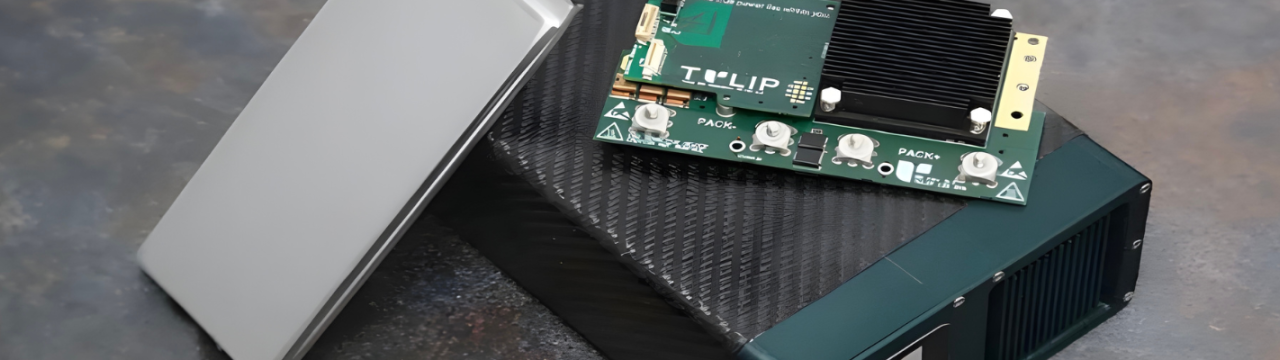
GaN-based active balancing: compare flyback, DAB, and switched-capacitor topologies with digital control; prototypes verify efficiency, equalization speed, and thermal behavior. Reconfigurable module: bypass/series/parallel with fault tolerance; SoC/SoH robust to reconfiguration; show flight after forced cell dropout with small voltage drop and little control impact. Safe boost support: bidirectional converter with aux cell or supercap; supervision via interlocks, fuses/TVS, and strict seconds-scale limits; sized to avoid oversizing and respect thermal limits. Integration & validation: HIL→bench→flight tests; logging for maintenance and lifetime models; modular service (fast submodule swap), traceable firmware, clear fault codes.